I. Overview
As an efficient concrete construction technique, dry-mix shotcrete technology holds a significant position in the engineering construction field, with the dry shotcrete spraying machine serving as the core equipment for implementing this technology. In recent years, driven by the continuous advancement of infrastructure projects such as mineral extraction, tunnel transportation, and slope protection, the market demand for dry-mix shotcrete machines has been steadily rising. With its unique operating principle and superior performance, this equipment significantly enhances construction efficiency, ensures project quality, and provides reliable support for concrete spraying operations in various complex working conditions.
II. What is the dry process of shotcrete?
The dry-spray concrete process, abbreviated as the dry-spray process, involves uniformly mixing dry materials—such as cement and aggregates—in predetermined proportions. These materials are conveyed through a delivery system to the sprayer nozzle, where they are instantly mixed with high-pressure water to form concrete slurry. Finally, compressed air propels the slurry at high velocity onto the work surface, where it sets and hardens.
The dry-spray process exhibits two key characteristics: First, it features a low water-cement ratio. Since water and dry materials are mixed only at the nozzle, water addition can be precisely controlled, resulting in high-strength, dense concrete after setting. Second, it offers rapid setting speed. When combined with accelerators, the concrete achieves initial strength in a short time, enabling swift support functionality—making it particularly suitable for projects requiring urgent reinforcement. Compared to wet spraying, dry spraying eliminates the need for pre-mixed concrete slurry. Its dry shotcrete spraying machine is more compact and mobile, with lower moisture content requirements for raw materials. This makes it ideal for water-scarce, remote, or confined construction environments. However, it generates relatively higher dust emissions during operation, necessitating stricter protective measures for both the work environment and operators.
III. What is a dry shotcrete spraying machine?
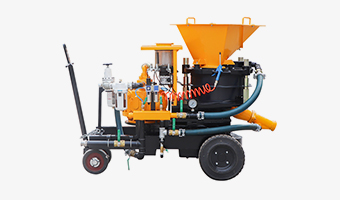
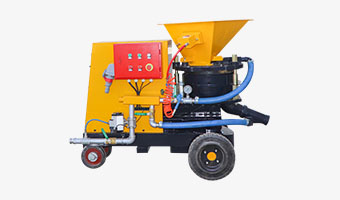
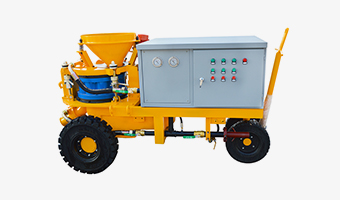
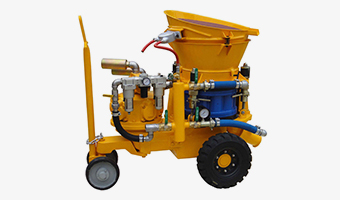
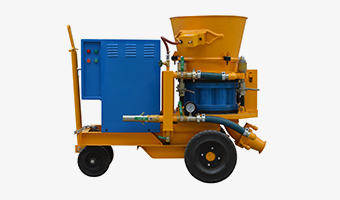
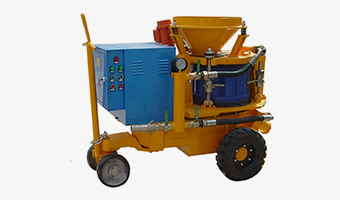
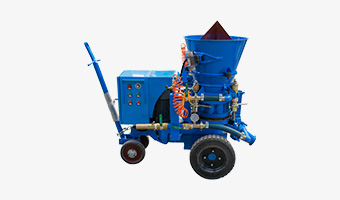
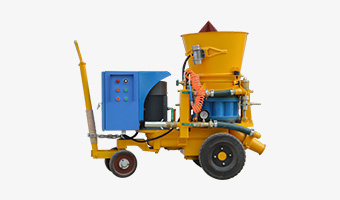
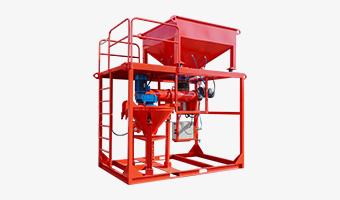
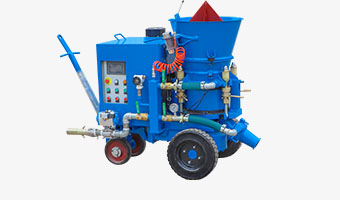
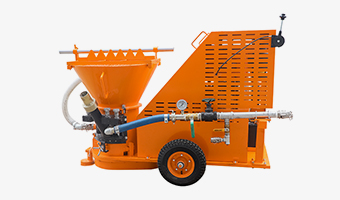
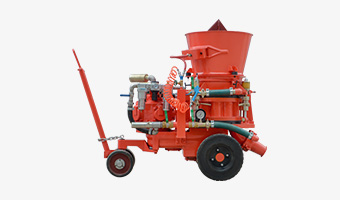
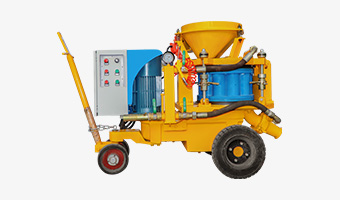
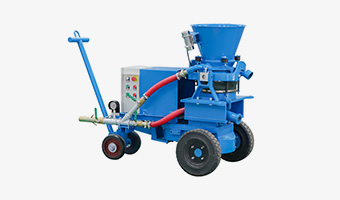
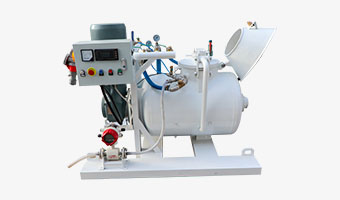
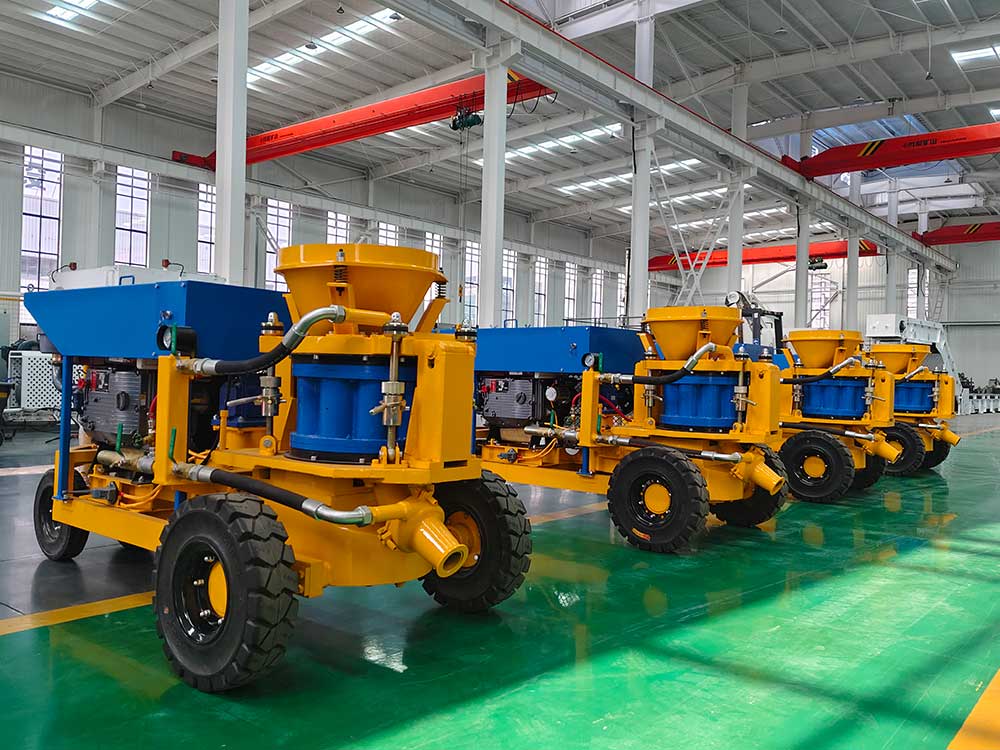
A dry shotcrete spraying machine is the core construction equipment dedicated to executing the dry-mix concrete process. It mechanically or pneumatically conveys dry-mixed mortar to the nozzle, combining it with high-pressure water and compressed air to complete concrete spraying operations. It is widely used in support, lining, and reinforcement construction across various engineering projects.
IV. What is the use of shotcrete machine?
With their flexible operation and reliable performance,
dry shotcrete spraying machines are extensively used in tunnel construction, civil engineering, water conservancy projects, and emergency repairs. Specific applications include:
1. Tunnel Construction: Core equipment for primary support and secondary lining in highway, railway, and urban rail transit tunnel projects. After tunnel excavation, the machine sprays concrete onto the surrounding rock surface to form an initial support layer, effectively constraining rock deformation. Following initial support completion, it can also perform secondary lining spraying to further enhance the tunnel's overall stability and durability. Particularly suited for confined spaces like tunnels, it offers high maneuverability and adapts to tunnels of varying cross-sectional dimensions.
2. Civil Engineering: Widely applied in slope stabilization, excavation shoring, and structural reinforcement. For landslide-prone areas like mountain slopes and road embankments, sprayed concrete forms a reinforcement layer to enhance slope stability. During building foundation excavation, dry-mix shotcrete machines support pit walls to prevent collapse. It also reinforces aging structures by spraying concrete onto components to enhance load-bearing capacity and durability.
3. Hydraulic Engineering: Primarily used for dam repairs, culvert reinforcement, and channel lining. For dams with cracks or leaks, shotcrete repairs and reinforces to improve impermeability and erosion resistance. In repairing culverts, aqueducts, and other hydraulic structures, dry-mix shotcrete machines rapidly complete spraying operations, ensuring normal facility operation. Additionally, it is used for channel lining construction to reduce seepage losses during water conveyance.
4. Emergency Repair Applications: These dry shotcrete spraying machines play a vital role in emergency repairs at disaster sites such as earthquakes, landslides, and collapse incidents. For collapsed buildings, roads, bridges, and other structures, dry-mix concrete sprayers enable rapid concrete application for temporary reinforcement, preventing further disaster escalation. Following flood disasters, it enables swift concrete spraying for embankment and road repairs, expediting the restoration of infrastructure functionality and accessibility.

V. Key benefits & advantages of dry shotcrete spraying machines
The widespread adoption of dry-mix concrete sprayers across multiple engineering fields stems from their core advantages, specifically:
1. High Construction Efficiency:
Dry-mix concrete sprayers achieve rapid application rates, typically reaching 5–20 cubic meters per hour, meeting demands for large-scale, time-sensitive projects. Additionally, the equipment eliminates the need for pre-mixed concrete slurry, bypassing concrete mixing and transportation steps to further shorten construction cycles and enhance overall efficiency. For instance, in initial tunnel support construction, dry-mix concrete sprayers enable continuous operation, significantly reducing support installation time.
2. Excellent Material Adaptability: This equipment is compatible with various dry-mix mortars and has relatively flexible requirements for aggregate particle size and grading. Different cement strength grades and aggregate types (e.g., river sand, crushed stone, manufactured sand) can be selected based on project needs. Additionally, admixtures like accelerators and water reducers can be added as required to further optimize concrete performance, making it suitable for diverse project scenarios.
3. Strong Environmental Adaptability: Dry shotcrete spraying machines demonstrate excellent resistance to harsh environments, maintaining stable operation under complex conditions such as high altitudes, low temperatures, arid conditions, and high dust levels. For instance, during highway tunnel construction in high-altitude regions, the equipment can start and operate normally without being affected by low atmospheric pressure or low-oxygen environments. In low-temperature conditions, when used with anti-freeze agents, it still ensures concrete spraying quality and setting strength, making it suitable for construction projects in remote areas and complex environments.
4. Compact Structure and Excellent Mobility: Dry shotcrete spraying machines feature a compact design with small footprint and light weight, facilitating easy transportation and relocation. For construction in confined spaces like tunnels and mine shafts, the equipment can flexibly adjust its working position to ensure comprehensive coverage without blind spots. Additionally, certain portable models support vehicle-mounted or towed transportation, making them suitable for projects with dispersed work sites and multiple operational points.
5. Cost-Efficiency and Controllable Expenses: The dry-mix process precisely controls water-cement ratios and material usage, minimizing concrete waste and maximizing material utilization. The equipment's simple structure and interchangeable components facilitate easy maintenance with low upkeep costs. Furthermore, its relatively low operational threshold requires no specialized high-tech operators, reducing labor expenses and delivering significant overall economic advantages.
6. High bond strength of sprayed concrete: The dry-mix process employs a low water-cement ratio. Under the impact of high-velocity airflow, the concrete slurry adheres tightly to the working surface. The resulting concrete layer exhibits high bond strength with the surrounding rock or base layer, excellent compaction, and effective load transfer. This enhances the stability and reliability of the support or lining. Additionally, the low water-cement ratio confers high compressive strength and water resistance to the concrete, thereby extending the service life of the structure.
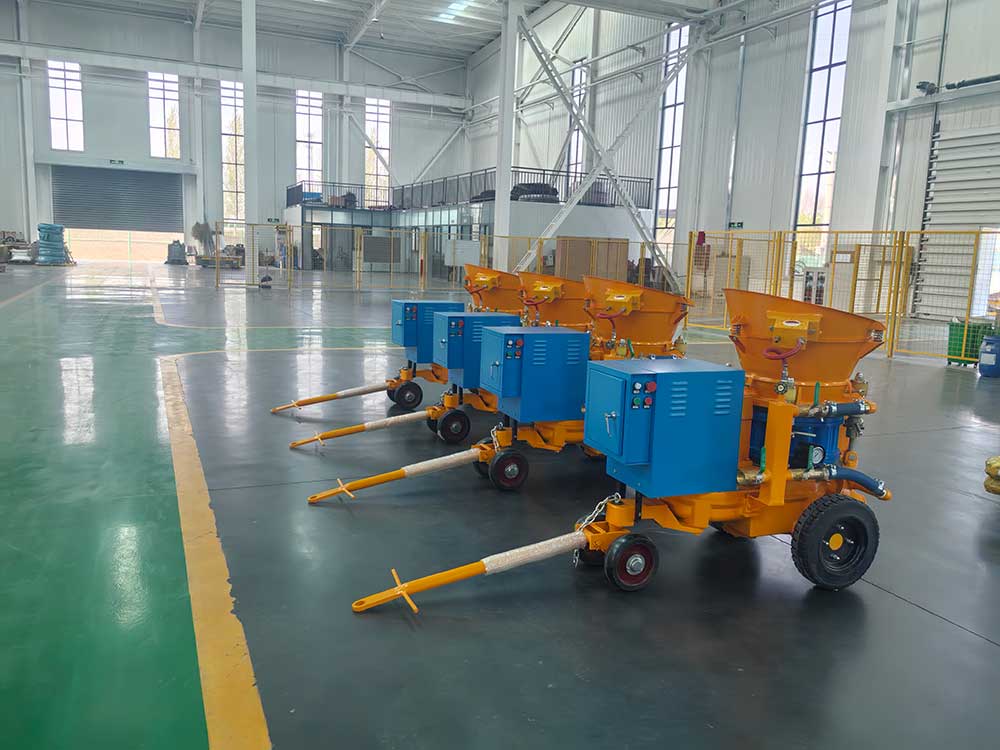
| Classification Dimension |
Specific Type |
Core Features |
Application Scenarios |
| By Power Type |
Electric Motor |
Low operating cost, easy operation, simple start and stop, easy to control; compact structure, small size, convenient for operation in narrow spaces; no exhaust emissions, environmentally friendly. |
Widely used in mines, tunnels, culverts, subways, hydropower projects, etc. |
| Pneumatic Motor |
No power supply required, suitable for remote work sites with no power supply or inconvenient power access; simple and reliable structure, not easily damaged. |
Suitable for small-scale operations such as swimming pool construction, tunnel construction, and slope stabilization, especially applicable in remote areas. |
| Diesel Engine |
Strong power output, able to meet the high-power requirements of large-scale equipment; high mobility, no dependence on fixed power supply, can be flexibly moved to different work sites. |
Suitable for outdoor projects such as large tunnels, slope protection, water conservancy projects, and areas with insufficient or no power supply. |
| By Production Capacity (Output Volume) |
3-5m3/h |
Small output volume, compact size, simple operation. |
Small-scale projects, daily maintenance operations. |
| 5-10m3/h |
Moderate production capacity, suitable for most conventional engineering needs. |
General construction projects, highway tunnel construction. |
| >10m3/h |
Large output volume, strong continuous operation capability, heavy-duty configuration. |
Large-scale projects, major infrastructure construction. |
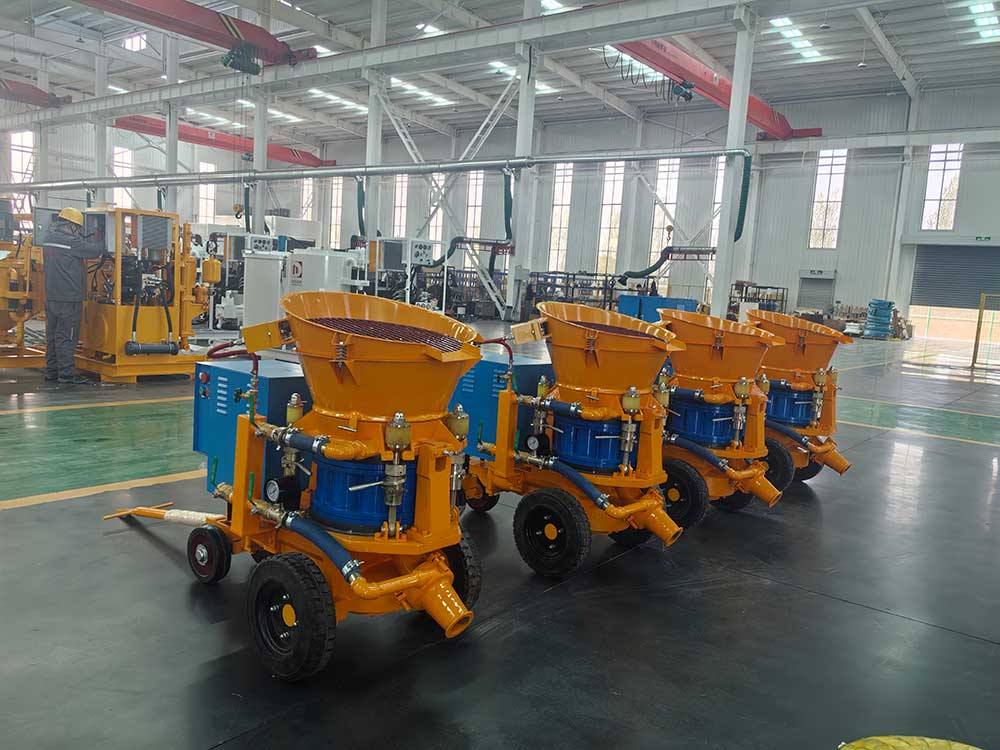
VII. Dry shotcrete spraying machine spare parts
Spare parts for dry shotcrete spraying machines are crucial for ensuring normal operation and extending equipment lifespan. Core spare parts primarily include the following categories, alongside the need for scientific maintenance methods:
1. Nozzles: As the terminal component for concrete slurry injection, nozzles directly contact high-velocity concrete slurry and aggregates, making them one of the most rapidly wearing parts in the equipment. Typically made of wear-resistant alloys or polyurethane, their structural design directly impacts concrete mixture blending efficiency and spray coverage. Wear, deformation, or blockage in nozzles leads to uneven spraying and reduced pressure, compromising construction quality. Therefore, nozzles are essential spare parts. It is recommended to stock a sufficient quantity based on construction volume, typically replacing nozzles every 500-1000 cubic meters of sprayed concrete.
2. Wear-Resistant Tubing: Used for conveying dry-mixed mortar and concrete slurry, its inner walls endure prolonged friction and impact from materials, leading to wear, thinning, or even rupture. This causes material leakage and pressure loss during conveyance. Wear-resistant tubing is typically made of abrasion-resistant rubber or polyurethane, with material selection based on conveyance distance and material properties. Regularly inspect wear-resistant pipes for damage. Replace them promptly when wall thickness reduces by over 30% or leaks occur to prevent reduced conveying efficiency.
3. Sealing Rings: Primarily used at equipment connection points (e.g., storage hoppers to conveying systems, material pipe joints, air compressor interfaces) to seal against air and material leakage. Seal rings are typically made of rubber or silicone. Prolonged use can cause aging, deformation, or cracking, leading to seal failure. Therefore, seal rings are common spare parts requiring regular inspection and replacement. During equipment maintenance, thoroughly inspect the condition of all seal rings.
4. Air Valve: Used to control compressed air flow and pressure regulation, this is a critical control component in pneumatic dry-mix shotcrete machines. The valve core and seat endure prolonged impact from high-pressure air and wear from impurities, making them prone to sticking, leakage, and other issues that affect spray pressure stability. Regular cleaning and lubrication of the air valve are recommended, along with inspection of valve core and seat wear. Replace immediately when malfunctions occur.
5. Filter Screen: Installed at the feed inlet of the storage hopper, it filters large particles and clumps from dry-mixed mortar to prevent clogging of the conveying system and nozzles. Prolonged use causes the screen to become clogged with impurities, reducing feed rate. It requires periodic disassembly and cleaning. If the screen is damaged, replace it promptly to prevent impurities from entering the equipment and causing malfunctions.
VIII. Dry shotcrete spraying machine price
The price of dry shotcrete spraying machines is influenced by multiple factors, with significant variations across different types and configurations. The spraying machine type and output capacity are the most critical factors affecting price. Portable dry-mix concrete sprayers, characterized by compact size and low output (below 5 cubic meters per hour), are relatively affordable. Conversely, large-scale dry shotcrete spraying machines feature high output (over 10 cubic meters per hour) and complex structures, resulting in higher costs. For example, our small dry shotcrete spraying machines typically range from $3,000 to $7,000 USD, while large models can cost between $8,000 and $28,000 USD.
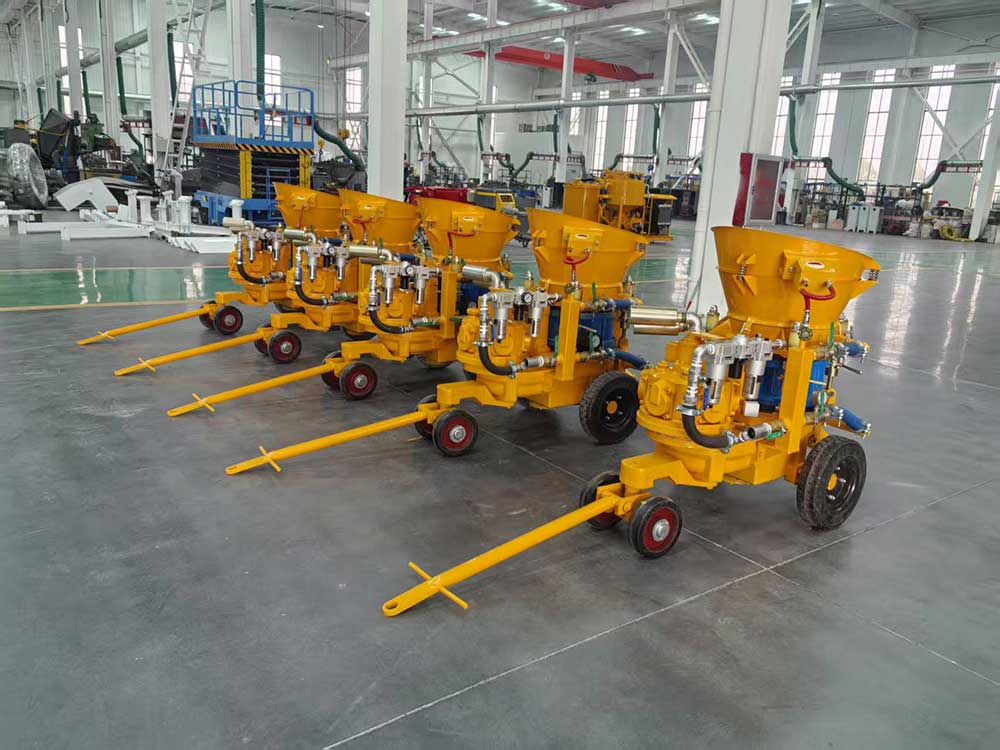
IX. Frequently asked questions (FAQs) about dry shotcrete spraying machines
Below are common questions users encounter when selecting and operating
dry shotcrete spraying machines, along with detailed answers:
1. What is the difference between dry-mix and wet-mix concrete spraying machines? Answer: The core distinction lies in concrete material preparation and delivery methods. Dry-mix shotcrete machines transport dry mortar mix, which is mixed with water at the nozzle; wet-mix shotcrete machines deliver pre-mixed concrete slurry for direct spraying. In terms of performance, dry-mix shotcrete machines are compact, highly mobile, and cost-effective, making them suitable for confined spaces and small-to-medium projects. However, they produce higher dust emissions and may exhibit slightly less uniform concrete quality. Wet-mix shotcrete machines feature lower dust emissions, consistent concrete quality, and higher strength, making them ideal for large-scale, high-standard projects. Yet, they are bulkier, more expensive, and demand strict control over material moisture content.
2. How should one select an appropriate dry shotcrete spraying machine for tunnel construction? Answer: When choosing a dry-mix sprayer for tunnel construction, consider the tunnel cross-sectional dimensions, construction schedule requirements, and available working space. For small tunnels (cross-sectional area < 10 m²), compact dry-mix shotcrete machines with high maneuverability are suitable for confined spaces. For medium-sized tunnels (10–20 m² cross-sectional area), medium-sized dry-mix shotcrete machines are recommended, offering moderate output (5–10 m³/h) to meet continuous construction demands. For large tunnels (cross-sectional area >20 m²) or projects with tight deadlines, large dry-mix shotcrete machines with high output (≥10 m³/h) should be selected. Additionally, equipment with excellent wear resistance is essential to withstand the harsh tunnel environment.
3. What is the maintenance cycle for dry shotcrete spraying machines? Answer: Maintenance cycles are categorized into daily, periodic, and annual maintenance. Daily Maintenance (before/after each workday): Clean equipment surfaces and material hoppers; inspect nozzle and feed hose wear; check seal integrity at all connections; apply lubricants. Periodic Maintenance (every 50 operating hours): Conduct comprehensive checks on feed screw and air valve operation; clean filters; inspect hydraulic system (if applicable) for oil pressure and leaks; replace severely worn nozzles and seals. Annual Maintenance (every 1000 operating hours or annually): Dismantle core components (e.g., conveying system, control system) for comprehensive overhaul; replace aged hydraulic oil, lubricants, and seals; perform full equipment calibration to ensure performance meets design specifications.
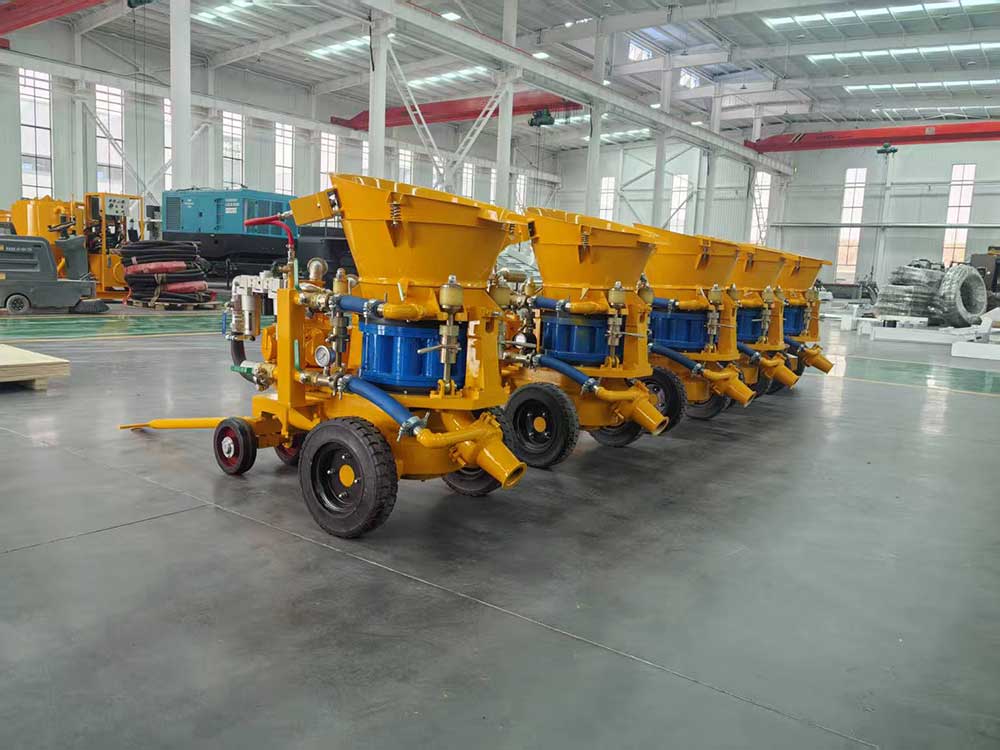
4. What causes uneven spraying in
dry shotcrete spraying machines? How to resolve it? Answer: Primary causes include: ① Uneven dry mortar mix proportions or clumping; ② Unstable feed rate; ③ Insufficient or uneven water supply; ④ Fluctuating spray pressure; ⑤ Severe nozzle wear. Solutions: ① Inspect dry mortar quality to ensure uniform mix proportions. Break up clumps before use; install mixing devices in storage hoppers if necessary; ② Inspect the feeding system (e.g., screw auger, pneumatic conveying device) and adjust the feed rate to ensure uniform feeding; ③ Check the water supply system and adjust the water flow to maintain a proper water-to-material ratio. Install a flow control valve at the nozzle for precise water regulation; ④ Verify the air compressor's operational status to ensure stable spraying pressure. Repair or replace the compressor promptly if pressure is insufficient; ⑤ Inspect the nozzle for wear and replace it immediately if severely worn.
5. What are the maximum spray height and range for dry shotcrete spraying machines? Answer: The maximum spray height and range depend on equipment type, spray pressure, and hose length. Portable dry-mix sprayers typically achieve 5-8 meters maximum height and 8-12 meters maximum horizontal range. Medium pneumatic dry-spray machines achieve 10-15 meters maximum height and 12-18 meters maximum range; Large dry-spray machines reach 15-20 meters maximum height and 18-25 meters maximum range. To increase spray height or range, extend the feed hose length (while accounting for pressure loss, typically not exceeding 50 meters) or use a high-pressure air compressor to boost spray pressure. Additionally, spray height and range depend on the concrete slurry mix ratio and flowability, requiring proper adjustment of water-cement ratio and admixture dosage.
6. Is the dry shotcrete spraying machine easy to operate? Do operators require training? Answer: Basic operation of the dry-mix sprayer is relatively straightforward, primarily involving equipment startup, feed rate adjustment, water supply regulation, and spray pressure control. However, achieving precise operation and ensuring construction quality necessitates professional training for operators. Training should cover: equipment operating principles, core component functions, operational procedures, parameter adjustment methods, daily maintenance, safety precautions, and emergency response measures. Untrained operators may cause equipment malfunctions, substandard spray quality, or even safety incidents (e.g., dust poisoning, equipment-related injuries) due to improper handling. Therefore, operators should undergo professional training and obtain certification before commencing work.